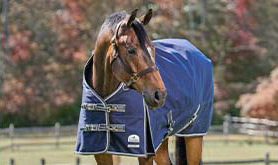
Blankets Have You Feeling Lost? You’ve Come To The Right Place!
Whether you need help choosing the perfect blanket for your horse or are looking for tips on clipping, we’ve got you covered. Just follow the signs below and let us be your guide!
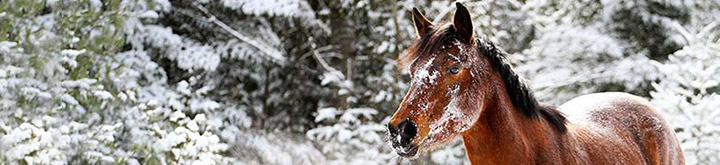
How Your Horse Stays Warm
Your horse’s coat may be smarter than you think!
Because your horse was designed to spend his days roaming outside, he is naturally equipped with tools to keep himself warm when the temperatures start cooling down. Here, we’ll take a look at what your horse does to stay warm, and why that may not always be enough.
In response to the fading sunlight, your horse’s body starts producing his winter coat as soon as the days start getting shorter. He begins to grow his longer, thicker winter coat in July, shedding the shorter, thinner summer coat in October. That winter coat has longer and coarser hairs than his summer coat, and he uses them to keep himself warm by fluffing them up to trap heat. The individual hairs stand up rather than lying flat against the skin, which traps warm air close to his body and insulates him from the cold.
Along with using this thick hair coat to stay warm from the outside, your horse also uses calories to keep himself warm from the inside. His body ferments roughage in the hindgut, which creates heat that helps maintain his core temperature, which is why many horse owners feed more hay in the winter. However, even your horse’s full winter coat and normal calorie intake may not be enough to keep him warm all winter, depending on his body’s lower critical temperature or LCT.
Your horse’s LCT is the lowest temperature at which he can maintain his core body temperature without using additional energy. Once the temperature outside gets below that LCT, his hair coat and normal calorie intake alone aren’t enough to keep him warm.
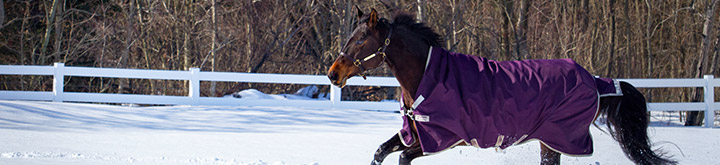
To Blanket Or Not To Blanket Your Horse
We’ll help you decide what’s right for you and your horse!
Deciding if and when you should blanket your horse depends on his: coat, living situation, digestive health and age, body condition, and the lowest temperature at which he can keep himself warm.
That’s why, like most things in the horse world, the short answer to the age-old debate of whether or not to blanket is “it depends." Every horse is an individual, and the decision to blanket should be based on their unique needs (and not just because their owner is cold!).
There are five key factors that play a role in how your horse stays warm, and we’ll help you understand how each one impacts the decision to blanket your horse.

Shorter periods of daylight trigger horses to grow longer, coarser winter coats. When it gets chilly, the hairs stand on end to trap warm air close to the body, insulating the horse from the cold.
-
 Horses with a full winter coat are likely to be OK au naturel
-
 Horses that are clipped or have sleek "show coats" will need a blanket to stay warm
Access to shelter can help horses cope when winter weather is at its worst.
-
Horses with stalls or other permanent shelter may well be fine with just their winter coat
-
 Horses that aren't able to fully escape from the elements should have a waterproof sheet or blanket to keep warm and dry

As horses get older, they become less efficient in many body systems such as digestion and immunity. The ability to maintain their core temperature, or thermoregulate, is one of these systems.
One way to help senior horses retain body heat is through blanketing, using the correct fill or weight of blanket so that overheating does not become an issue.
Body condition, or the measure of overall fat cover, impacts how easily a horse can regulate his temperature.
-
Easy keepers, or horses with plenty of fat, are more likely to be fine sans blanket
-
Hard keepers, or naturally thin horses, often burn extra calories just trying to keep warm, so giving them a blanket is a smart choice

The LCT of an individual horse will depend on the temperatures that he’s accustomed to, the amount of body insulation he has (length of his hair coat and the amount of body fat), and whether he lives inside or outside.
That’s why horses in warmer climates often "get dressed" at milder temps than horses in colder areas, and why those with a full winter coat can sometimes benefit from a blanket!
Still not sure if you should blanket your horse?
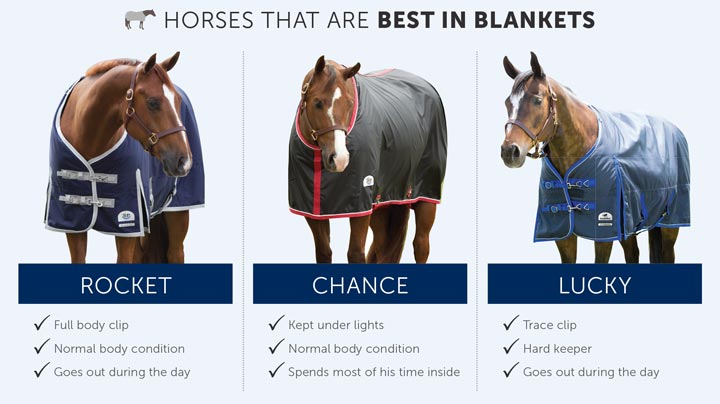
Check out why these example horses are blanketed (or not) and see if one of them matches your horse’s situation.
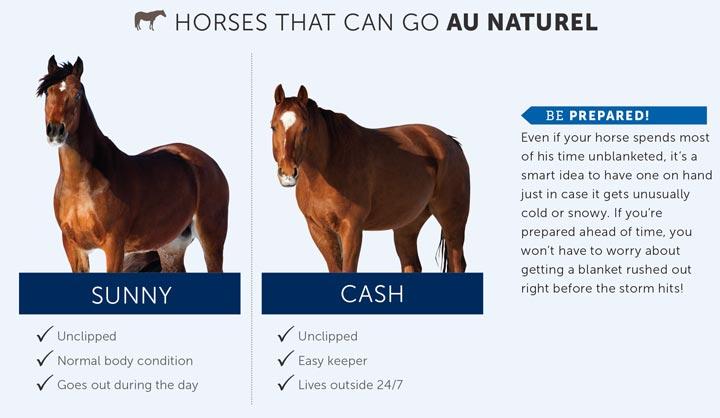
SmartTip: It’s best to be prepared!
Even if your horse spends most of his time unblanketed, it’s a smart idea to have one on hand just in case it gets unusually cold or snowy. If you’re prepared ahead of time, you won’t have to worry about getting a blanket rushed out right before the storm hits!
Types of Horse Blankets and Sheets
We’ll help you understand what to wear when
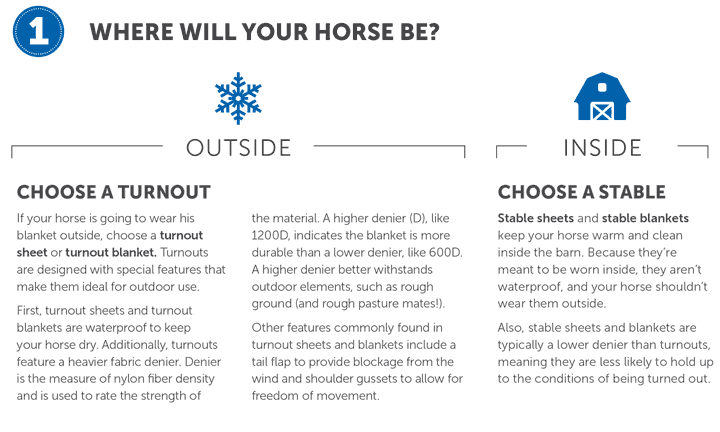
A horse sheet is lightweight and may not have fill, whereas a horse blanket has filling to keep your horse warm. They come in two varieties: turnout and stable. Turnout sheets and turnout blankets are waterproof and designed to be worn when your horse is outside, while stable sheets and stable blankets are not waterproof and meant to be worn when your horse is inside. Choosing between these types can be overwhelming, but we’ll take a closer look at the differences here to help you ensure that your horse’s wardrobe is properly stocked.
You have a variety of outerwear in your own wardrobe because you need options based on whether it’s rainy, snowy, or too cold to even be outside—and your horse should, too! While there are a whole variety of types of horse clothing, we’re going to focus first on two key factors – the level of warmth and the presence (or absence) of waterproofing.
Warmth of Horse Blankets & Sheets
When it comes to understanding the importance of warmth, a surprising analogy can help – your bed! Think of the items you use to “dress" your bed – the sheets are very thin and provide little in the way of warmth. Blankets, on the other hand, are bulkier, cozier, and keep you warmer.
The same is true for dressing your horse! Horse sheets are thin and lightweight, while horse blankets provide considerably more warmth. And just like the ones on your bed, horse blankets come in different thicknesses or amounts of warmth.
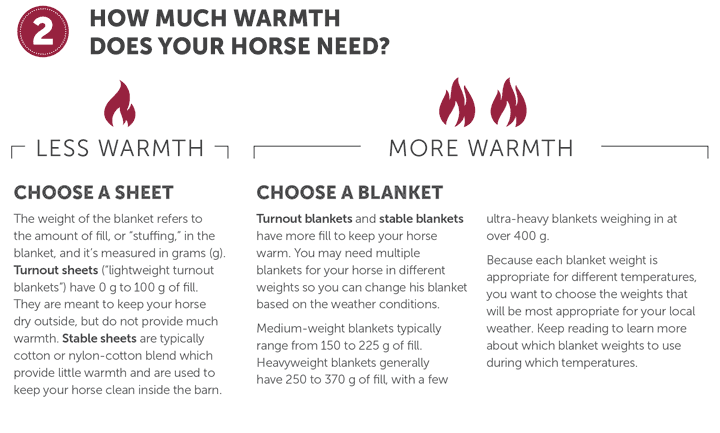
The amount of warmth a blanket provides is measured in grams of fill (basically “stuffing"). Here’s a rough breakdown on blanket weight that can be helpful when shopping:
- 0-100 grams of fill – Sheets (also sometimes called “Light Weight Blankets," because nothing’s ever that easy in the horse world!)
- 150-250 grams of fill – Medium Weight Blankets
- 300+ grams of fill – Heavy Weight Blankets
Waterproof Horse Blankets & Sheets
This is the element where your horse is not like you. While you might be fine outside on a clear day in a sweater or sweatshirt, if your horse is going to be outside, it’s best to use a waterproof outer layer. That’s because if your horse lays down on ground that looks dry, his blanket or sheet can still absorb moisture and when that damp blanket meets cold air, it can end up making him chillier than he was without the blanket or sheet in the first place!
In a very helpful naming convention, stable blankets and stable sheets are not waterproof and are intended to be used indoors, as their name implies! Turnout blankets and turnout sheets, on the other hand, are waterproof and safe for use inside and out in the turnout or pasture. In addition to being waterproof, turnouts also tend to have a heavier denier, which means they’re tougher and can stand up to outdoor elements, like rough ground (or rough pasture mates!).

What to Wear, & When
Sheet or blanket? Stable or turnout? If your horse is going to be outside you’ll want to put on a turnout, whereas you can choose a stable if he’s only going to be in the barn. Depending on the temperature, you’ll choose a sheet if it’s warmer outside and a blanket if it’s colder, but just like Goldilocks, your horse wants his blanket to be just right. Deciding how much to bundle your horse up can be tough, but we’ve got two questions that can help you decide!
Temperature Chart for When to Blanket Your Horse
Just like it does for us humans, 40 degrees will feel different to a Florida horse in October than it will to a horse in Chicago in February, so you’ll need to dress your horse differently depending on the temperatures he’s used to.
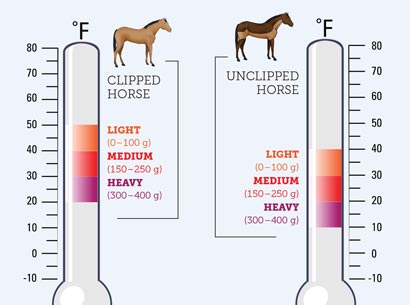
The temperature outside isn’t the only factor to consider when you’re choosing the right blanket for the weather. Other factors, like your horse’s living environment and whether or not he’s clipped should also be taken into account. In general, follow these temperature guidelines when blanketing clipped and unclipped horses:
Clipped horses may wear:
- A light blanket in 50-40° F
- A medium blanket in 40-30° F
- A heavy blanket below 30° F
Unclipped horses with a full winter coat may wear:
- A light blanket in 40-30° F
- A medium blanket in 30-20° F
- A heavy blanket below 20° F
Measuring Your Horse for a Blanket
Yes, your horse has a size!
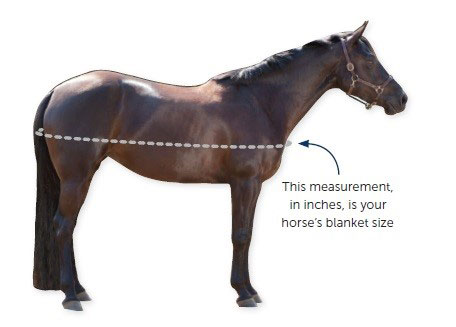
Finding a perfectly fitted blanket starts with measuring your horse to find his true size. Check out our guide on how to measure a horse for a blanket for step-by-step instructions and a video you can easily follow along with to figure out your horse’s size.
Cleaning & Storing Horse Blankets
Protect your investment!
Cleaning and storing your horse sheets and blankets properly is essential to making them last. You should store them up off the ground with a blanket rack, bar, or bag during blanket season and in a sealed container during the off-season. At the end of blanket season, you can wash and re-waterproof them yourself, or send them to a professional horse blanket washing service. Read on to learn more about our smart storage tips and to check out our blanket washing guidelines.
Storing Horse Blankets and Sheets
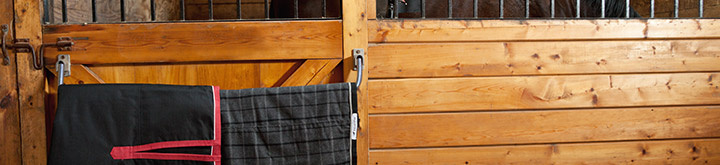
On a chilly winter day, the last thing you want to be doing is digging through piles of blankets in your tack room to find the right one for the weather. Luckily, there are several ways you can keep your horse’s blankets neat, tidy, and off your barn aisle or tack room floor during blanket season. Our top picks for blanket storage include blanket racks that can be hung on the wall, blanket bars for your horse’s stall door, and blanket bags that can be hung on your horse’s stall door. Whatever your situation, we’ve got a blanket storage solution that will meet your needs!
Once you’ve gotten your blanket rack, blanket bar, or blanket bag, your next step is to fold your blanket so that you can store it neatly. If you’re tired of struggling with unruly blankets or leg straps hanging out all over the place, we’ve got you covered with a how-to video on the easy way to get a tidy fold in no time flat!
Once blanket season is over, your work isn’t done yet! Storing your horse’s blankets properly during the off season will protect your investment and help ensure that they’re ready to go when the cool weather comes again. Before you store your blankets, it’s important to wash them and make any necessary repairs. (Don’t know the best way to clean your horse’s blankets? Check out our tips below!) Once your horse’s blankets are clean, dry, and in good repair, store them in a sealed container such as the bag they came in, a tote or trunk, or a vacuum seal storage bag to keep dirt, mold, mildew, and any pesky critters out.
Cleaning Horse Blankets and Sheets
When it comes to washing your horse’s blankets, you have two options: washing them yourself, or using a laundry service.
If you’ve chosen the do-it-yourself route, you can use your own washer or head to the laundromat. If you’re going to try a laundromat, be sure to call first to make sure that horse blankets are allowed. It’s also a smart idea to do a pre-wash at the barn first to help save your washer. Just use a stiff brush to get any excess hair, mud, or dirt off the blanket, hose it off, and hang it to dry.
After your pre-wash at the barn, it’s time to hit the laundry! Ideally, you should follow the washing instructions provided by the manufacturer, and consider using a detergent specifically designed for horse blankets, like SmartWorks Blanket Wash. Once your blankets have been through the washer, you can hang them to dry. To help prevent the color from fading, consider hanging them in the shade rather than in the sun. Once your blankets are clean and dry, you’ll also want to consider re-waterproofing them.
If you’ve decided that you’d rather not wash them in your own washer, many areas offer horse blanket washing services. If you’ve never used a blanket laundry service before, ask your barn mates or other riders you know for recommendations. When you’re researching the different services available to you, a few things to consider are whether they apply a waterproofing coating after they’ve finish washing them, if they offer blanket repairs, and if they’ll pick up your dirty blankets and deliver your clean blankets back to your barn.
Re-Waterproofing Horse Blankets and Sheets
A number of factors, including age, improper washing, and improper storage can cause the waterproof coating of your horse’s turnout blankets and sheets to break down over time. If you’re noticing that water no longer “beads off” your horse’s turnout blanket or sheet, this may indicate that it needs to be re-waterproofed. Just like with washing, you have two options when it comes to re-waterproofing your horse’s blankets: doing it yourself or sending your blankets to a professional blanket washing and repair company.
If you’re already planning to send your blankets and sheets to a professional to be washed, look for a laundry service that also offers re-waterproofing services. If you’re planning on washing your horse’s blankets yourself, then it may make the most sense for you to re-waterproof them yourself while you’re at it. Keep in mind that before you re-waterproof your horse’s blankets on your own, it’s a smart idea to check with the manufacturer and see whether re-waterproofing it will invalidate any warranties on it in the future. In addition, you can see ask if they have any specific recommendations for what type of re-waterproofing product to use on their blankets.
Once you’ve determined that you’re definitely taking the do-it-yourself route, it’s time for you to hit the store (or the Internet!) and find a re-waterproofing product. There are a variety of spray and wash-in products that you can use to re-waterproof your horse’s blankets. You can use products that are designed specifically for horse blankets, or you could even head to an outdoor or camping store and check out waterproofing products designed for general use. After you’ve chosen a product, read the instructions on the bottle carefully and apply it as directed for maximum benefit.
Pieces & Parts of Horse Blankets
How to tell your surcingle from your gusset
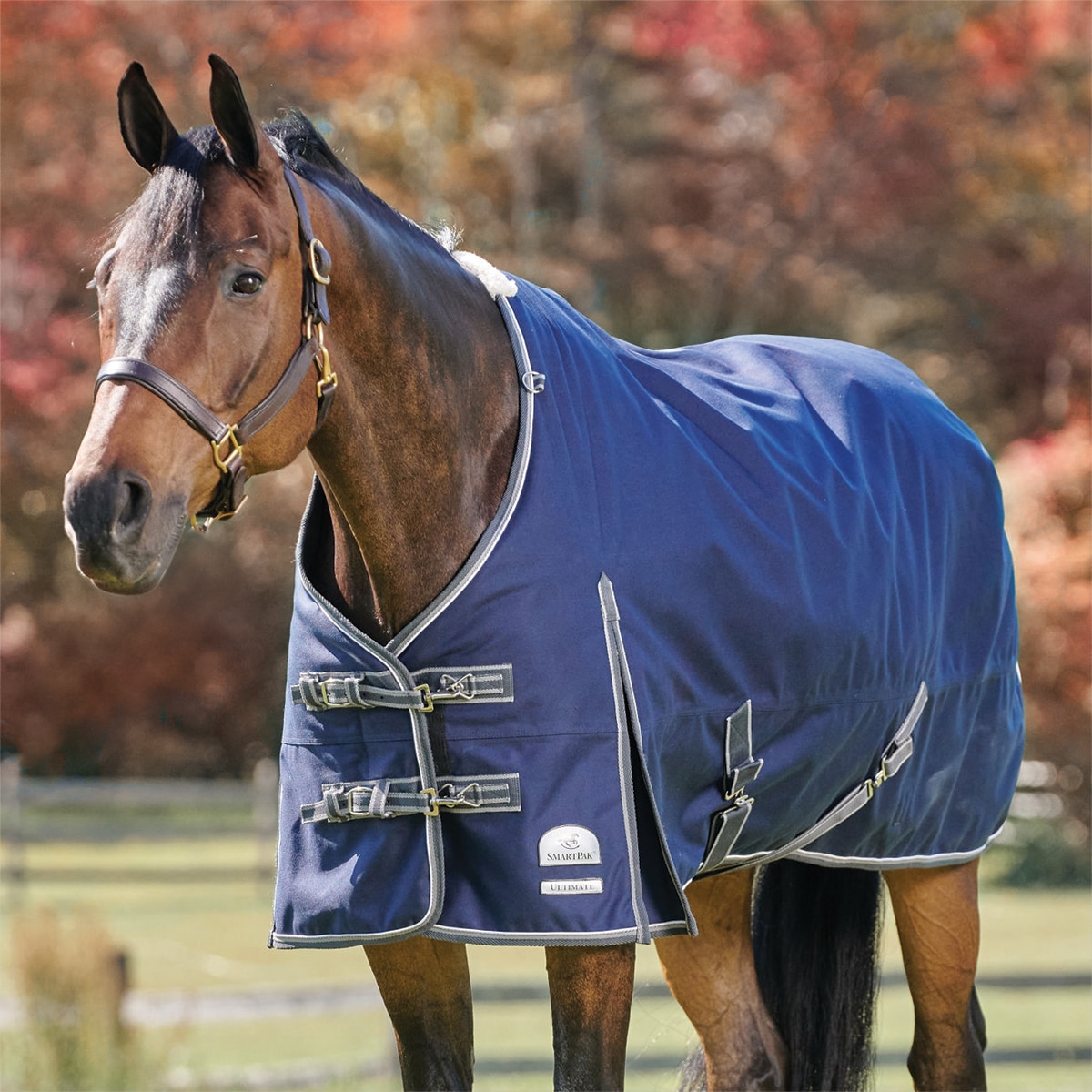
Horse blankets are constructed in three layers: the lining, the fill, and the shell. The lining, which is typically made of cotton, poly-cotton, nylon, or mesh, reduce friction and can even help smooth and polish your horse’s coat. The fill, or “stuffing,” is what keeps your horse warm. As we described earlier in this guide, blankets can have anywhere from 0 to 300+ grams of fill, depending on what amount of warmth they’re intended to provide. The shell, which is the outermost layer of the blanket, is what protects your horse from the elements.
Here are some other key components to look for in blankets:
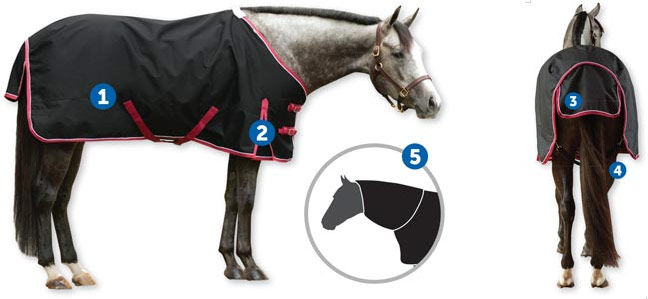
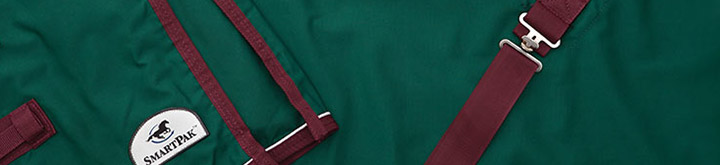
- One, two, or three surcingles cross under the belly, securing the blanket in place. More surcingles = more secure fit.
- Shoulder gussets offer a bit more “give," allowing greater freedom of movement.
- A tail flap offers full wind and rain protection for horses who spend a lot of time outside. The bottom of the flap should reach the middle to the end of the tailbone.
- Optional nylon or elastic leg straps help prevent shifting and keep the blanket secure in windy weather. For safety and security, these straps shouldn’t hang loosely. Loop them through each other to help avoid rubs.
- Hoods and neck covers are separate pieces designed to attach to the turnout blanket for more complete coverage.
Horse Blanketing Glossary
-
Sheets – Sheets don’t have any fill, (just like the sheets on your bed) so they’re the lightest piece of apparel in your horse’s wardrobe. There are many different types of sheets:
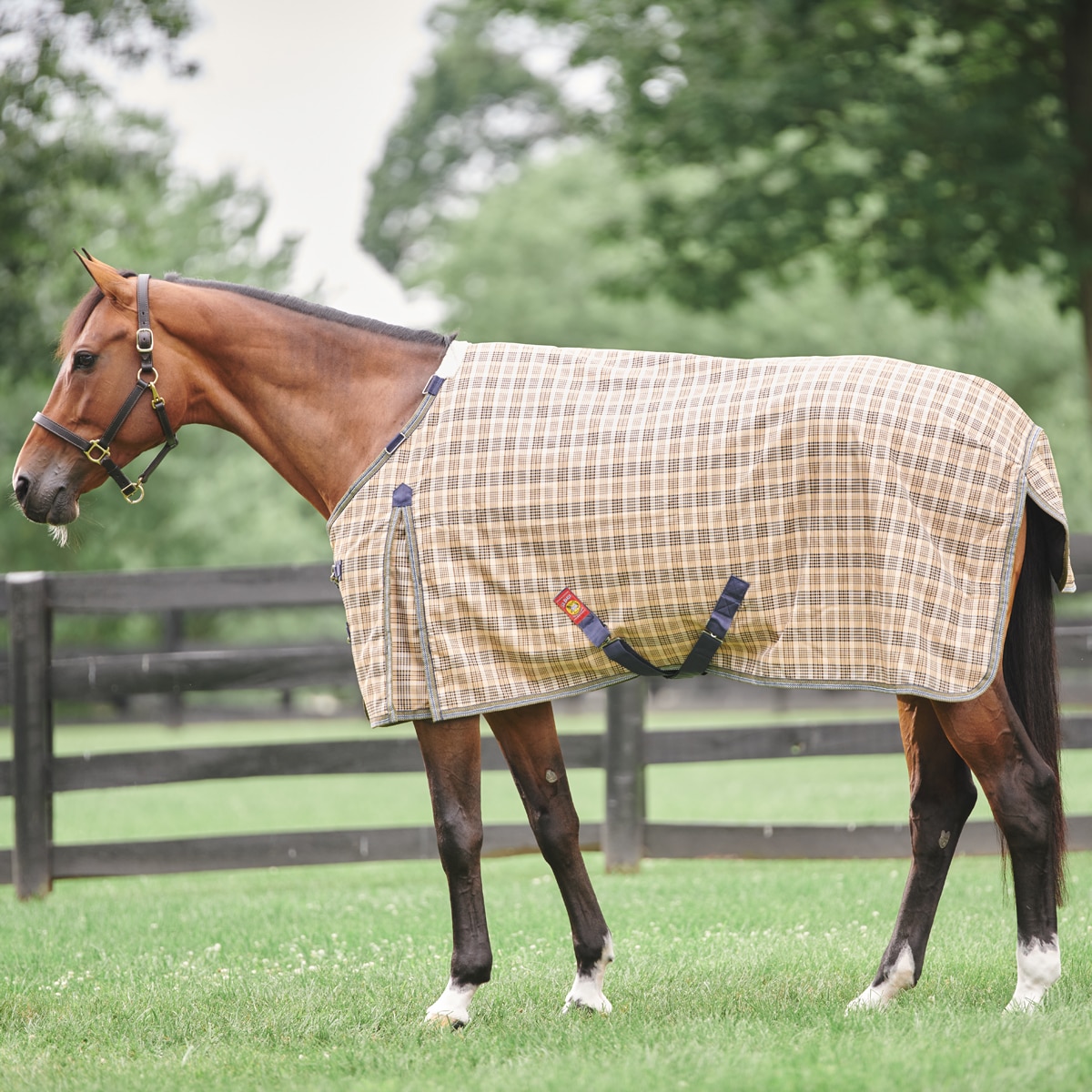
- Stable Sheet – The stable sheet is the piece of apparel people are usually referring to when they simply say “sheet." Usually made from cotton, poly/cotton, nylon or canvas, stable sheets are designed to keep the coat clean and provide a light layer of warmth.
- Show Scrim – Scrims are extremely lightweight, open-weave sheets designed to keep your horse clean ringside at shows. Usually made from poly/cotton or nylon fabric and embroidered with the horse or barn name, scrims are generally considered to be more about style than function.
- Anti-Sweat Sheet – Similar to scrims, anti-sweat sheets have an open-weave that increases breathability and reduces sweat build-up. They are usually made from 100% cotton or a poly/cotton blend to help wick away moisture. Anti-sweat sheets are a great option after summer rides when you want to keep your horse clean while he cools out.
- Fly Sheet – Designed to protect your horse from pesky bugs, fly sheets are lightweight, breathable and durable enough to withstand turnout. Some fly sheets offer UV protection, while others may be treated with insect repellants for extra bug-blocking power.
- Rain Sheet – Rain sheets offer waterproof protection for your horse and your tack. They’re great for horse shows or stables where the indoor is not attached to the barn. Traditional rain sheets cover the horse from the poll to the top of the tail, however they’re not very secure and therefore not recommended for use in turnout.
- Turnout Sheet – Just like rain sheets, turnout sheets are completely waterproof due to a special coating. Unlike rain sheets, turnout sheets are very secure and designed to stay in place when your horse is running out in the field. Some blanket manufacturers refer to turnout sheets as “light turnout blankets," since they serve the same function (lightweight waterproof protection).
- Dress Sheet – Dress sheets are finely crafted fleece, wool or wool blend sheets that offer both style and functionality. They keep your horse cozy (and looking fabulous) on chilly horse show mornings, wick away moisture when he’s cooling out and can be used as blanket liners for extra warmth in particularly cold weather.
- Quarter Sheets – Usually made of fleece or wool, quarter sheets are designed to cover your horse’s hindquarters and wrap up under the saddle flaps or over your legs when you’re riding. Many riders prefer to use quarter sheets just for the warmup, while others keep them on for the entire ride, especially during long, cool-weather trail rides.
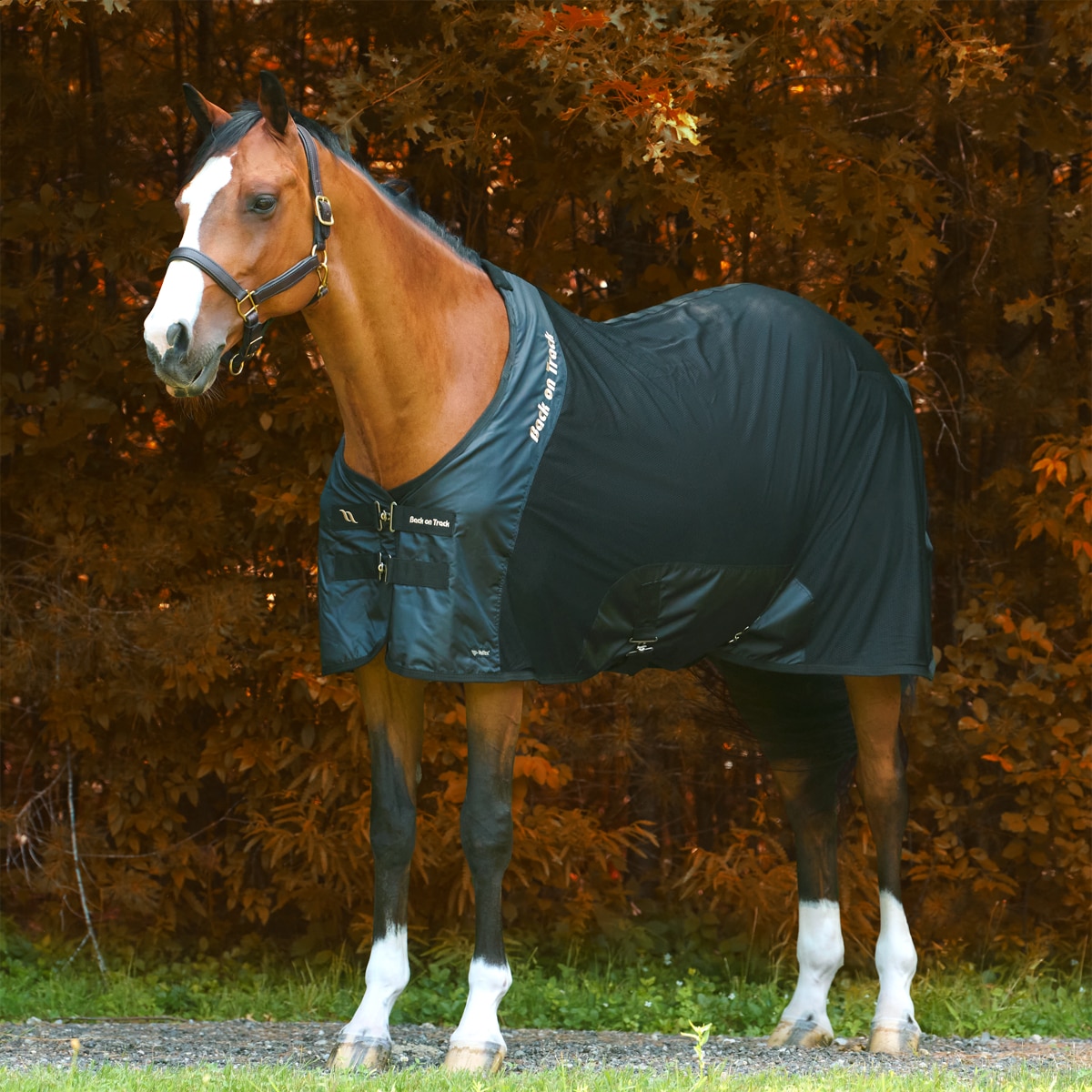
- Coolers – Coolers come in two styles: square and fitted. Square coolers are oversized and loose, draping over your horse from the poll to the top of the tail and hanging just below the belly. Fitted coolers are snug-fitting, like stable sheets, and the term “fitted cooler" is often used interchangeably with “dress sheet." Regardless of the cut, coolers are made from fleece or wool that draws moisture away from the skin while trapping heat; helping to keep horses warm and dry, not cold and clammy, as they cool out after winter riders.
- Stable Blankets – Stable blankets are similar in style and material to stable sheets, but unlike sheets, blankets are filled, like the comforter on your bed. They come in a range of weights, offering different levels of warmth so that you can dress your horse according to the weather. Because the exterior material is not waterproof, stable blankets are generally used when the horse is in the stall. For waterproof protection, some owners will layer a turnout sheet over their horse’s stable blanket when the horse is outside.
- Turnout Blankets – Turnout blankets combine the warmth of a stable blanket with the waterproofing of a turnout sheet. Just like stable blankets, turnout blankets come in a range of weights, to allow for temperature fluctuations throughout the winter. Their exterior material has a waterproof coating and a breathable membrane to keep your horse warm and dry through the worst winter weather. Some manufacturers, particularly those in Europe, will refer to turnout blankets as “turnout rugs."
- Weight/Fill – The weight of a blanket refers to the amount of fill, or “stuffing," which is measured in grams. A lightweight blanket (aka “sheet") has 0g or no fill. Medium-weight blankets have anywhere from 150-225g of fill. Heavyweight blankets have 250-370g of fill, with a few ultra-heavyweight blankets weighing in at 400g of fill.
- Denier – Denier is the measure of nylon fiber density and is used to rate the strength of the exterior material on horse blankets. Like fill weight, denier varies greatly from one blanket to the next. A higher denier, like 1200D, indicates the blanket is more durable and more water-resistant than a lower denier, like 600D.
- Rip-Stop – Rip-stop nylon features a checkerboard weave that helps prevent small rips from spreading, so you can patch a small hole instead of replacing the entire blanket.
- Ballistic – Ballistic nylon was originally developed for use in bulletproof vests. Ballistic nylon turnout blankets won’t stop bullets, but they will put up with a lot of abuse.
- RePET® / rPET – An eco-friendly option, blankets made with recycled PET plastic repurpose water bottles and other post-consumer recyclable plastic to help keep waste out of landfills and oceans.
- Lining – Because the exterior material is often quite rough to stand up to the elements, many blankets have liners that are softer against your horse’s skin. Cotton or poly/cotton linings are absorbent, nylon linings help polish the coat and mesh linings enhance air flow and moisture management.
- High Neck – This style of turnout blanket is cut significantly higher up on the horse’s neck, offering extended protection from the elements.
- Neck Rug/Neck Cover – These separate pieces are made from the same material as turnout blankets and are designed to attach to the turnout blanket for more complete coverage. Many owners use neck rugs to adjust their horse’s level of protection and warmth as the temperature fluctuates.
- Hood – Like neck rugs, hoods are separate pieces that can be used for extra warmth. Unlike neck rugs, hoods are made from the same material as stable blankets and cover the horse’s face, as well as the neck.
-
Front Closures – There are many types to choose from, but these are the most common:
- Buckle-Front – Just like a regular belt buckle, usually nylon straps with a metal buckle. Offers a lot of adjustability.
- Surcingle – Also known as “T-locks," surcingle closures on the front of the blanket will function just like the belly surcingles, with two metal pieces that interlock to keep the blanket closed.
- Quick-Clip – Any metal snap or clip fastener that you can open and close with one hand. Really “handy" to have if you’re taking blankets on and off repeatedly. Easy to use with gloves, which is a big plus in the winter!
- V-Front – Usually cut a little higher on the neck, V-Front blankets fasten lower on the chest, eliminating pressure when the horse has his head down.
- Closed Front – Closed-front blankets have no opening in the chest, so they’re taken on and off over the head. The smooth, streamlined fit helps eliminates bunching and rubs.
- Shoulder Gussets – Gusseted blankets have an extra piece of fabric sewn in at the shoulder, to allow for great range of motion.
- Padded Withers – Fleece or foam padding at the withers can reduce rubbing, a common problem for many horses.
- Leg Arches™ – With Horseware Ireland’s patented Leg Arches™, the edge of the blanket is cut back around the legs to allow for movement without interference or rubs from the blanket.
- Surcingle – The belly strap(s) that is primarily responsible for keeping the blanket in place. Sheets and blankets can have anywhere from one to three surcingles, with two being the most common. The more surcingles on the blanket, the more likely it is to stay in place.
- Leg Straps – These straps crisscross between the horse’s back legs, providing stability, preventing the blanket from riding up or shifting out of place.
- Tail Flap/Tail Cover – An extra swatch of fabric that covers the tail area, usually to the bottom of the tail bone, to help seal out cold winds.
- Tail Cord – This cord ties the back ends of the blanket together and rests under the tail, helping to keep the blanket in place.